
What Voedselpark Amsterdam taught me about financing land stewardship and the commons
For more than 20 years I have worked at the intersection of finance, nature and systemic change. Between economy and ecology.
And I can tell you the transition is not waiting to happen. It is already happening.
It is happening in communities restoring landscapes, stewarding land as a commons, creating food forests, building energy cooperatives, experimenting with community ownership, developing new forms of finance and patiently rebuilding relationships between people and place.
The challenge is that it small and local and it is happening everywhere, all at the same time.
After co-founding Voedselpark Amsterdam in 2021 and working alongside many of these initiatives, I can honestly say that I have never learned more about what really needs to happen, and where it needs to happen, than I have during these past five years. The work is incredibly hopeful, but it is also exhausting. Most of these initiatives operate with very little funding, very little institutional support and an extraordinary amount of commitment. They require enormous perseverance, trust and dedication simply to keep going.
And yet, despite all the conversations about sustainable finance and impact investing, our financial system still struggles to support exactly these kinds of initiatives. Communities spend countless hours writing grant applications, reporting to different funders, competing for the same limited resources and constantly having to prove their value. Or they don’t have any fiancial support and just get on with it. The people doing the hard work on the ground often receive the least support.
That is why I was so excited when I first heard about Ma Earth, and why I was excited to listen to Matthew Monahan’s recent conversation with Nate Hagens on The Great Simplification. It is an excellent podcasts, and this episode is particularly significant because, for the first time, I heard someone describe not simply a new funding mechanism, but the beginnings of the enabling infrastructure that grassroots communities have been missing.
For several years now at the Schumacher Center David Bollier and I have been exploring what we call relationalized finance. Instead of asking how to allocate capital more efficiently, relationalized finance asks a different question: how can finance strengthen the relationships that allow communities, ecosystems and local economies to thrive?
Ma Earth offers one of the clearest practical examples I have seen of relationalized finance in action.
The conversation is not really about money. It is about relationships, trust and the infrastructure needed to help them flourish.
Matthew argues that the world does not primarily suffer from a shortage of philanthropic capital. It suffers from a shortage of enabling infrastructure. The systems through which money flows are fragmented, competitive and disconnected from place. Projects repeatedly tell the same story to different funders, complete different application forms and submit different impact reports, while valuable knowledge remains locked away in separate databases. Communities spend their time navigating bureaucracy instead of regenerating landscapes.
Ma Earth approaches this differently. Rather than creating another platform that owns information, it is building shared infrastructure. Projects own their own data. Communities help curate and verify one another’s work. Trust becomes something that is built collectively rather than individually. Instead of treating relationships as something external to finance, relationships become part of the financial system itself.
That, to me, is relationalized finance.
This also resonates deeply with our work at Bioregional Weaving Labs and the Bioregional Financing Facility (BFF) we are building in Europe. I often say that we are not trying to create a pipeline of projects. We are trying to build healthier bioregional portfolios of systemic innovations that can really regenerate a region. That means strengthening the relationships between many initiatives so that the resilience of the whole landscape increases. The unit of investment shifts from organisations to relationships. The unit of impact shifts from individual projects to communities, living systems and natural ecosystems.
One of the reasons I feel comfortable endorsing Ma Earth is the people helping to shape it. Seeing practitioners such as Samantha Power, and innitiative associated with people like @Joe Brewer and Will Ruddick (links to their Ma Earth page below), gives me confidence. These are people I respect immensely and whose work has influenced my own thinking for many years. Together with many others, they bring decades of experience in commons, community finance, bioregional regeneration and local economic development.
I also decided to submit my own local innitiative Voedselpark Amsterdam to the current Ma Earth funding round. Partly because I was curious to experience the platform from the inside, but also because Voedselpark Amsterdam is exactly the kind of initiative that reveals where our current funding systems fall short. We are not simply creating a farm. We are stewarding land as a commons, combining biodiversity restoration, local food production, education, community ownership and neighbourhood resilience. These projects create multiple forms of value simultaneously, yet conventional funding systems often struggle to recognise them because they are designed around individual organisations, short-term outputs and narrowly defined impact.
The application process reinforced something I already suspected: we do not simply need more money. We need better infrastructure for trust, coordination and collective intelligence.
After so many years of conversations about the need for enabling infrastructure for life at scale, this is the first serious attempt I have seen to actually build it. That is what makes Ma Earth so exciting to me.
If you haven’t yet listened to Matthew Monahan’s conversation with Nate Hagens, I highly recommend it.
And if you believe that communities should have greater capacity to steward land, restore ecosystems and build local economies, I hope you will also explore the Ma Earth funding round. The campaign only runs for 3 weekd until 21 July, and one of the lovely features of the platform is that you can support multiple projects with a single donation.
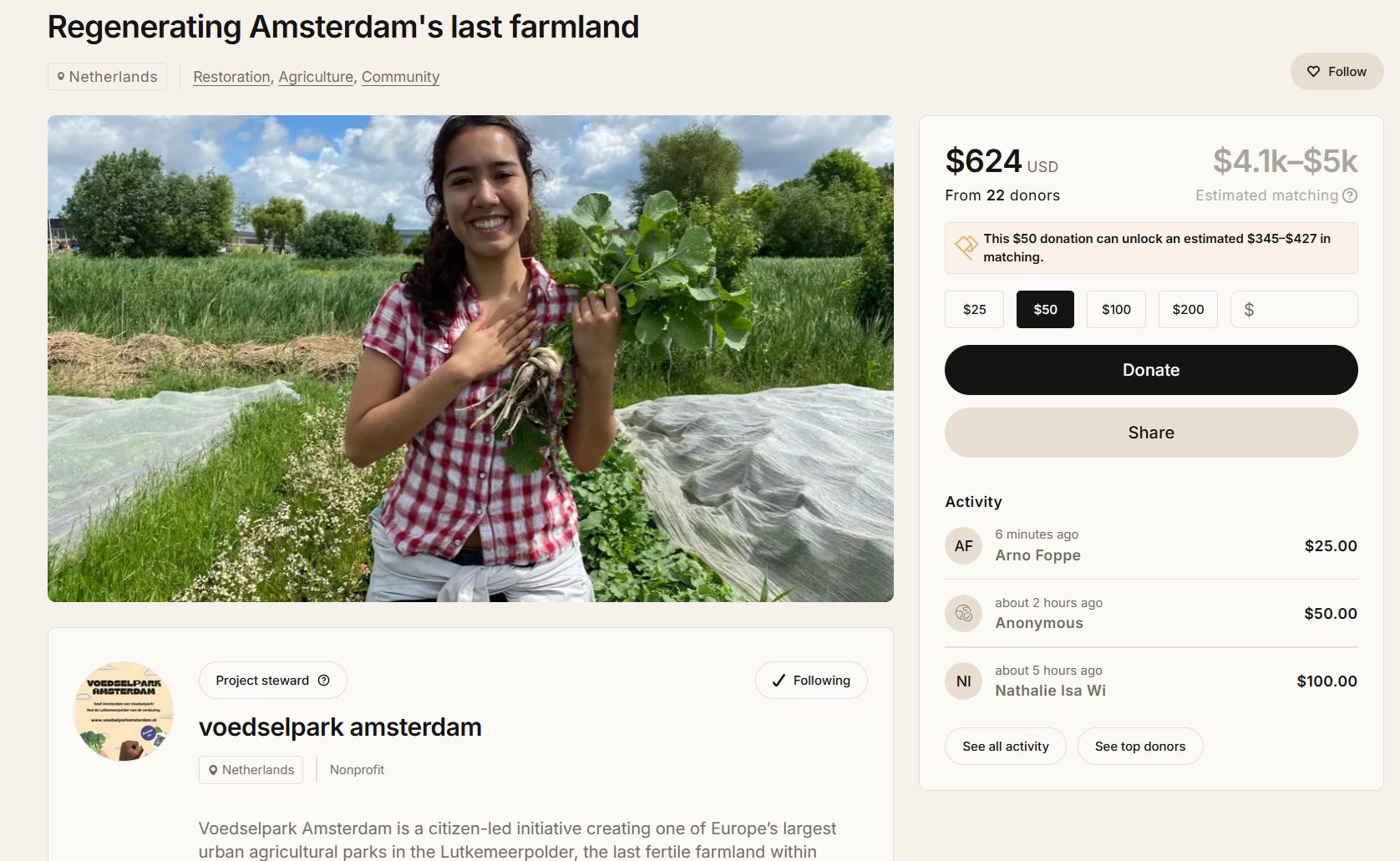
here is the link to the Foodpark Campaign (a little goes a long way check out the matching funds)
Of course, I would be delighted if you chose to support Voedselpark Amsterdam. One of the beautiful aspects of the Ma Earth model is that many small donations have disproportionate impact because they unlock additional matching funds while signalling broad community support. A donation of around $10 can ultimately leverage many times that amount through the matching pool. But I would equally encourage you to explore the many remarkable land stewards and commons initiatives participating from around the world.
Together they demonstrate something I have become increasingly convinced of over the past twenty years.
The future will not be built by a handful of extraordinary organisations. It will be built by thousands of communities, working in relationship with one another and supported by financial infrastructure that is finally designed to help life flourish rather than extract from it.
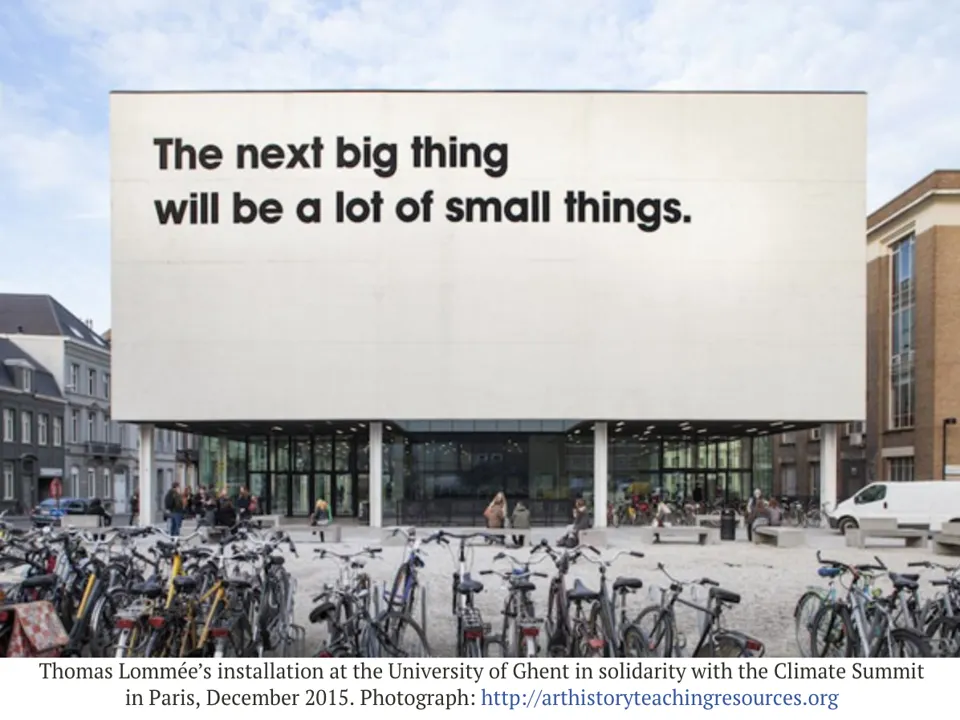
The next big thing will be a lot of small things.
And it is already happening. Everywhere at once!
Links:
Check out the Ma Earth platform here:
Support Food Park Amsterdam here: https://maearth.com/voedselpark-amsterdam-37dbb1c8/ad724362
Watch/Listen to Nate Hagen and Matthew Monahan converstion on the great simplification podcast here on any podcast platform:
https://www.youtube-nocookie.com/embed/yoJPgx2VlRQ?rel=0&autoplay=0&showinfo=0&enablejsapi=0
Read our article on realationalized finance here: https://substack.com/@natashahulst/p-182067337
My shopping Cart!
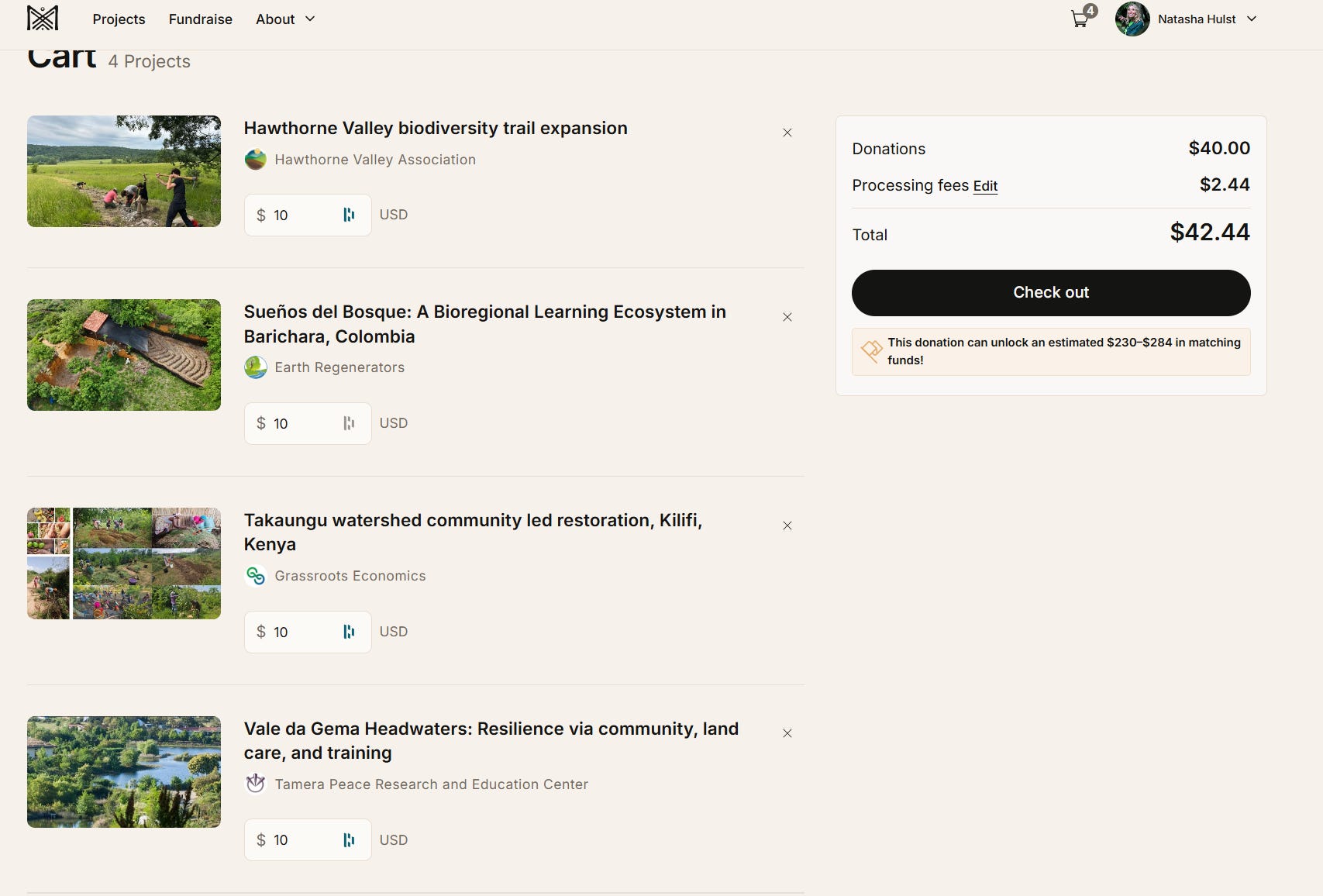
check out these great projects:
https://maearth.com/grassroots-economics/7ab7572b
https://maearth.com/barichara-regeneration-fund/b0ae9804
Also finally links to Bioregional Weaving Labs and Schumacher Center for New Economics