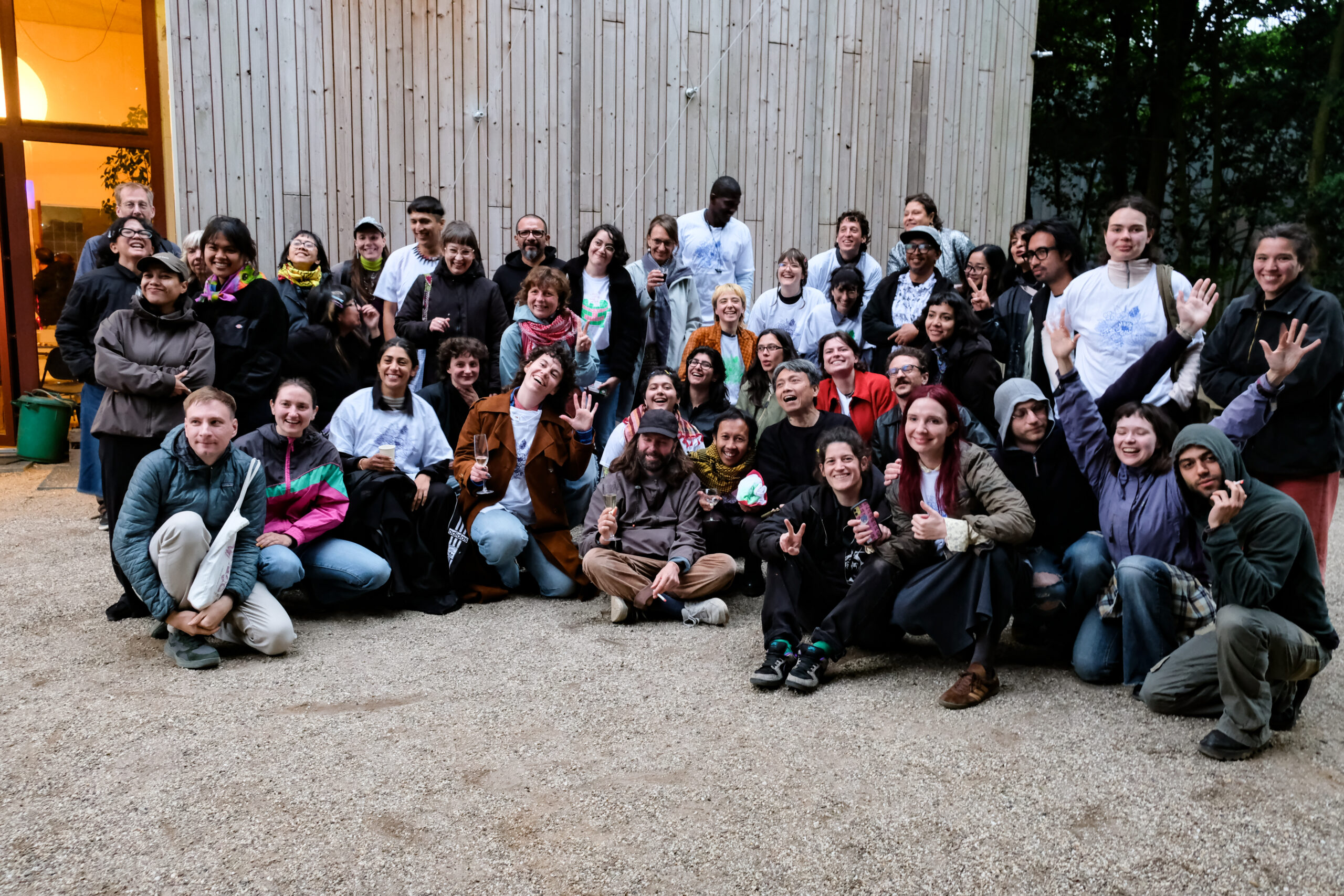
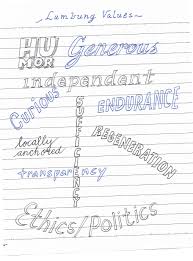
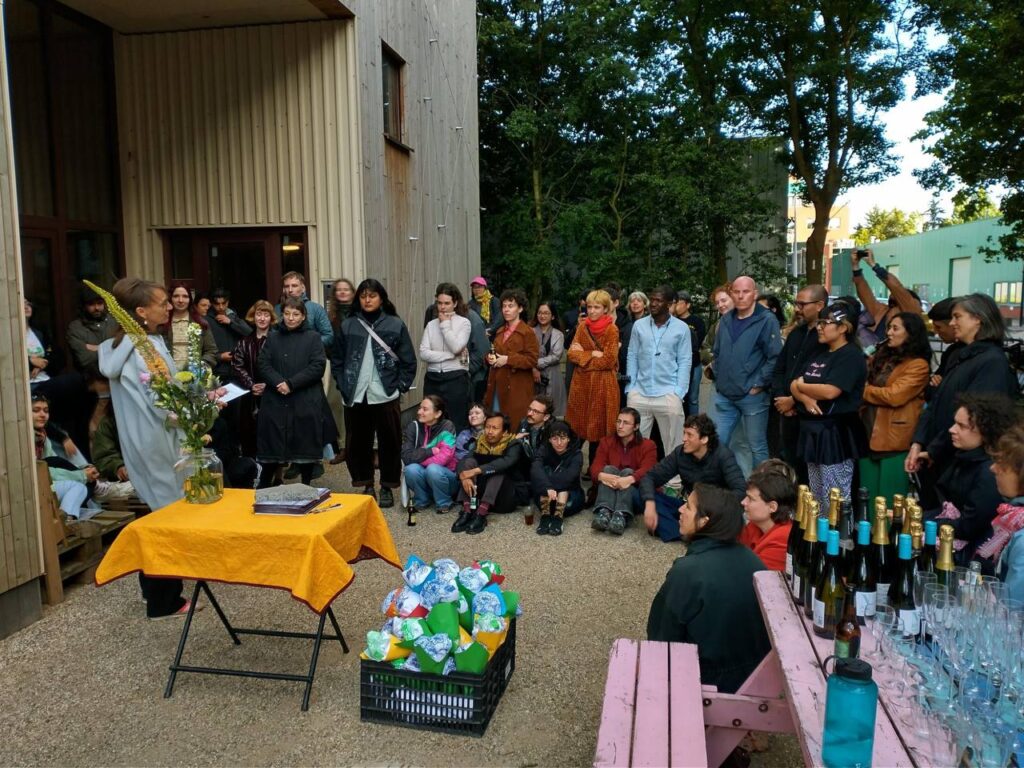
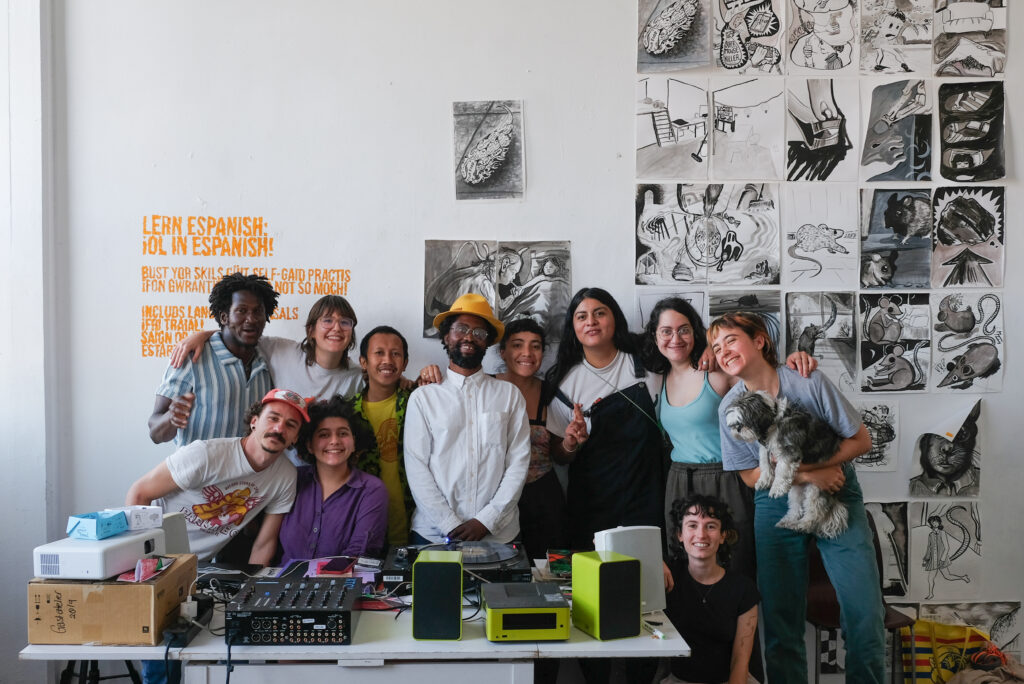
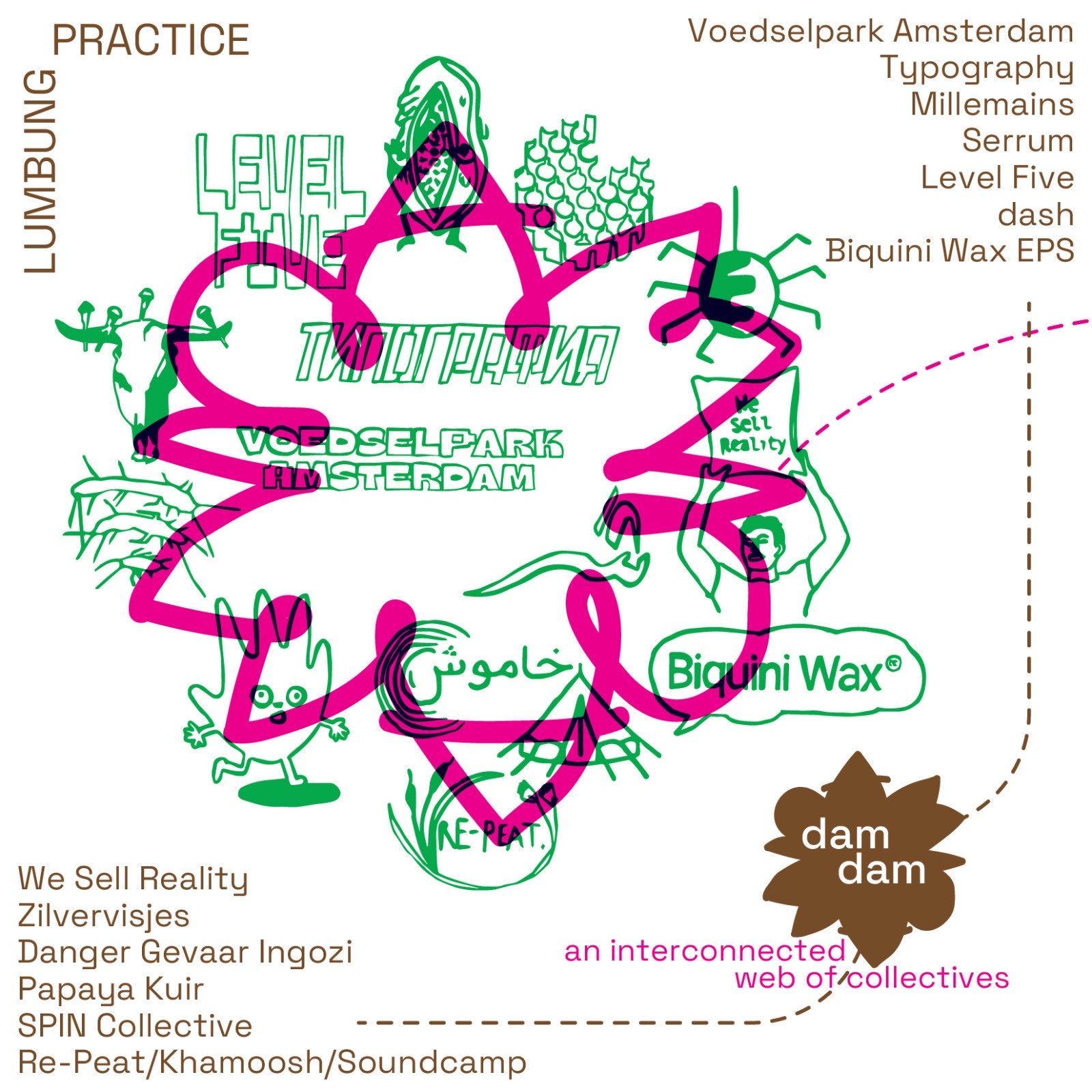
damdam is a collective of collectives consists of 20 collectives based around the world, part of the Lumbung Practice and Lumbung ecosystem. it functions as a decentralized structure of solidarity, reclaiming visibility as a collective, social, and political gesture rather than an art piece. This is grounded in the desire to establish the infrastructural and organizational conditions necessary for translocal connection and solidarity. The project aims to build the frameworks, tools, and habits that allow our localities to remain interconnected, despite differences in geography, access, or resources. These layers of infrastructure are not just technical or logistical; they are ethical and relational. They determine how we share, how we collaborate, and how we remain accountable to one another across distances.
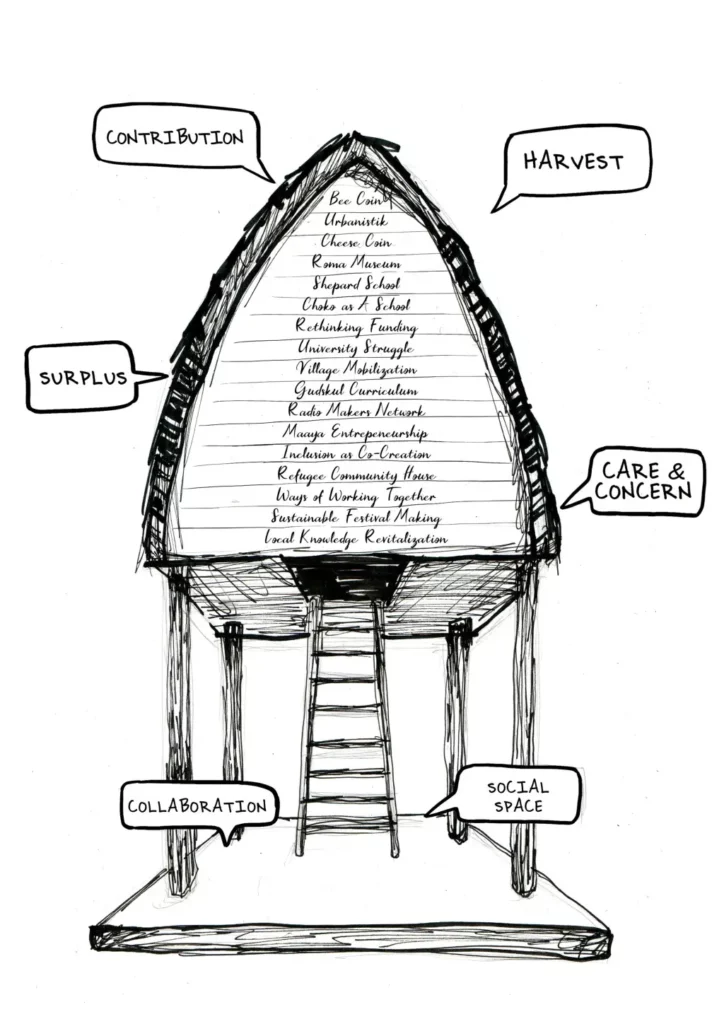
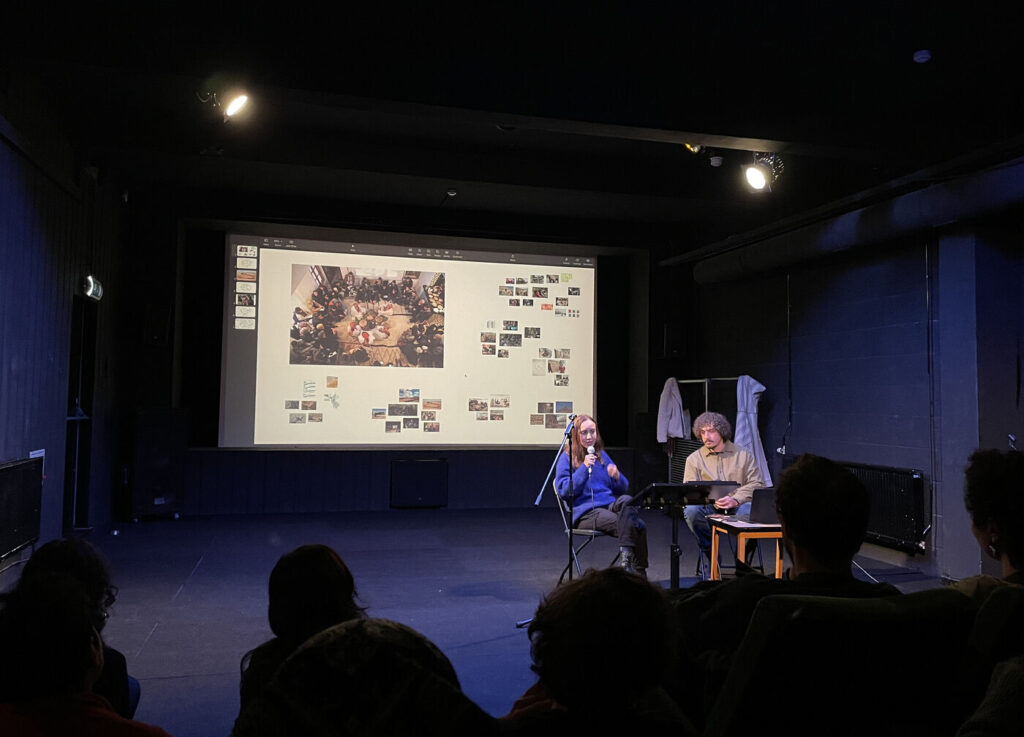
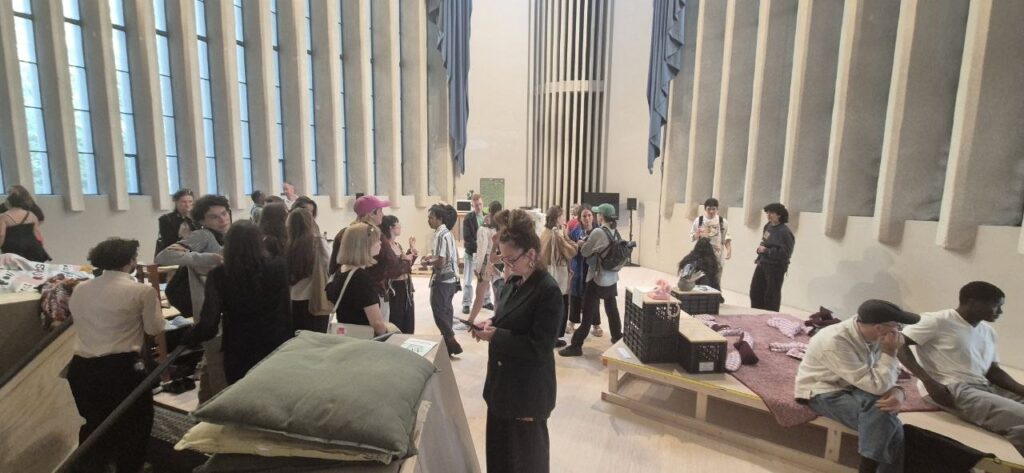
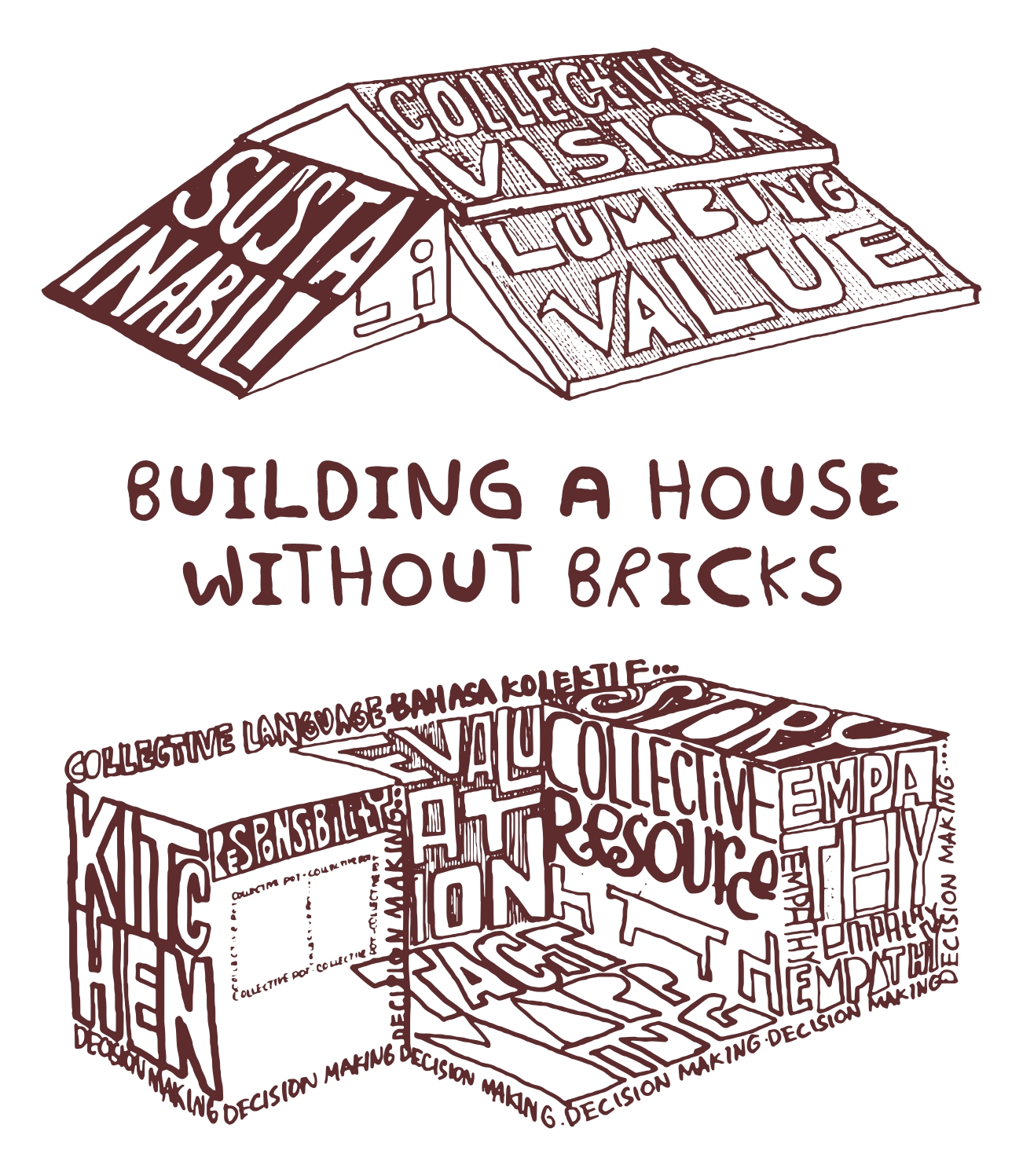
Building a House Without Bricks consists of a public programme and exhibition hosted by damdam which seeks to cultivate methods of collective organisation in times of crisis. The festival is formulated around three central questions: How to organise? How to distribute labour and resources? How to share what we produce? The exhibition at de Appel is the second act, after a three day public programme at OT301 in June, where we invite you into the house, turning to the physical and material structures inside. Acknowledging the limits of an exhibition, we focus on objects and their potential for resource re-distribution through transvestment (transferring resources from one value system to another). The objects are commissioned by the different collectives within damdam, who shared instructions to collaboratively build a house that reflects current needs in sustaining collective practice. With these objects, we build a house that can transvest resources into each collective’s local context, using a framework that balances production budget and fees with their needs.
Film Pot is a shared digital space where filmmakers in and around the Lumbung ecosystem contribute works into a common pool: a living archive built on trust, circulation, and collective use. It grows from the experience of translocal communities, the understanding that moving images can carry context across borders, and that learning from each other's contexts and ways of seeing the world is itself a form of being together. It brings together a selection of films created in the different localities where our ecosystems are rooted, including Mexico, Palestine, Indonesia, Iran, Chille, Russia, Belgium and the Netherlands, The films do not share a single theme so much as a shared condition: they travel and make a place for encounter where physical presence was not possible.